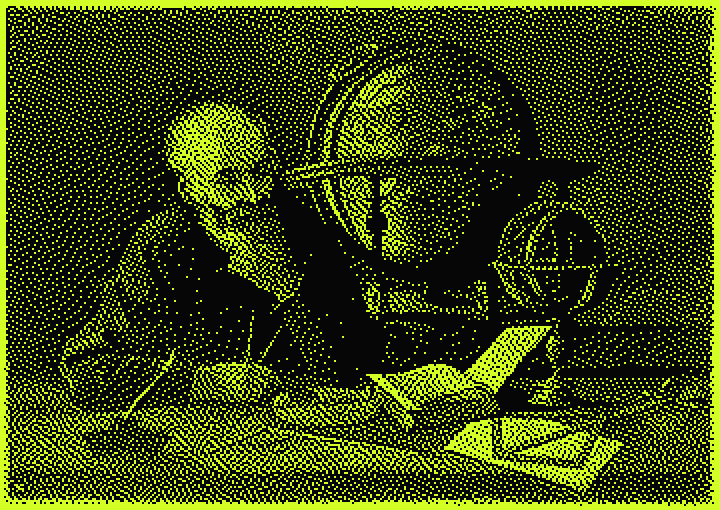
Why does science happen at all? Textbooks usually say: to understand the world, to change it, to improve human welfare. None of that is wrong, but it leaves out the earliest and most enduring motive of all — curiosity, and the delight that comes with it. From the wonder, leisure and contests of the Greeks, through the early modern vindication of curiosity, to twentieth-century scientists’ defence of “the usefulness of the useless”, science has always carried a spirit of play. Yet between paper-counting and the scramble for funding, that delight is being squeezed out bit by bit, and the arrival of AI has raised the fear that discovery itself will be taken over by machines. This essay follows that thread and tries to show that AI could rob research of its joy — or give that joy back to many more people. Everything depends on how we design it.
1Why do scientists do science?#
In 1981 the BBC documentary The Pleasure of Finding Things Out recorded a long conversation with Richard Feynman. When the talk turned to the Nobel Prize, he grew a little impatient. He said he didn’t really understand what the prize was about; the real prize was the pleasure of finding things out, the thrill of the moment of discovery, and seeing other people use what you had found. Honours, as far as he was concerned, were not real.1 This was no prizewinner’s false modesty. Still, we need not follow him in making light of honour. Curiosity and the will to win have always come as a pair: it was the drive to win arguments that led the Greeks to argue their way into philosophy, and one of the real prizes Feynman listed — “the observation that other people use it” — is itself a form of honour. In his memoirs Feynman tells a more concrete story. After the Second World War, at Cornell, he was burned out and convinced he would never again do anything important, so he decided to do physics purely for fun, without caring whether it was of any use. One day in the student cafeteria someone tossed a plate into the air. He noticed that the plate wobbled as it spun, with the Cornell emblem on it going round and round, and he idly began to work out how the wobble was related to the spin. One calculation led to another, and he found himself back at the relativistic problem of electron orbits. As he later put it: “The diagrams and the whole business that I got the Nobel Prize for came from that piddling around with the wobbling plate.”2
The story is usually told as an anecdote about genius, but what it describes is something ordinary and important in science: a great deal of important work starts out as a game. Someone is caught by a phenomenon and wants to understand it, so they try things out, do some sums, argue with other people — and enjoy every minute. Delight is not a decoration on science. Nor is it merely its fuel: to call delight a fuel is still to make the game serve something else. Science is itself a way of playing, and the delight is internal to it.
Today, though, the fuel is running low. Researchers are chased by papers, metrics and grant applications, and delight survives only in occasional moments (see metrics and paper-counting). Now that AI can generate a paper in minutes and a proof in hours, people have begun to worry that the joy of discovery, too, will be taken away by machines. To answer that worry we first have to go back to the source and trace the path that curiosity and the play spirit have taken through the history of science; only then can we discuss what we might do. The New Science Manifesto calls for research that you can “pick up and play”; this essay sets out to supply the history and the reasons behind that call.
2Where does the desire to know begin?#
The first sentence of Aristotle’s Metaphysics says that all human beings by nature desire to know. His evidence is homely: we delight in our senses, and even apart from their usefulness we love them for their own sake — above all, sight.3 He then turns to the origin of philosophy. Now as in the beginning, people start to philosophize out of wonder: at first they are puzzled by the obvious difficulties close at hand, then little by little they advance to questions about the changes of the moon, the sun and the stars, and about how everything came to be. Someone who is puzzled and full of wonder feels himself ignorant; people sought knowledge to escape their ignorance, pursuing it for the sake of knowing and not for any use. He adds a fact by way of confirmation: it was only when almost all the necessities of life, and the things that make for comfort and recreation, had been secured that such knowledge began to be sought.3
Plato’s Theaetetus contains an even more famous passage. When the young Theaetetus is left dizzy by Socrates’ questions, Socrates tells him that this feeling of wonder is the very feeling of a philosopher, for philosophy has no other beginning; whoever said that Iris, the rainbow goddess, was the daughter of Thaumas, the god of wonder, was no bad genealogist.4 For the Greeks, wonder was an experience that stops you in your tracks: something you have always taken for granted suddenly seems incredible, and you want to understand it.
Wonder needs leisure. Aristotle says the mathematical arts first arose in Egypt because the priestly caste there was allowed leisure.3 The Greek word for leisure was scholē, which passed through Latin to become our “school”: the place of learning is named after free time.5 Seeking knowledge is not a way of earning a living; it is the thing most worth doing once the living is earned. There is a story that a student who had learned the first theorem from Euclid asked what he would get by learning these things. Euclid called his slave and said: “Give him threepence since he must make gain out of what he learns.”6 The story may not be true, but it captures an attitude exactly: geometry has a value of its own and needs no other benefit to justify it.
The Chinese tradition holds the same intuition. The “Yong Ye” chapter of the Analects says: “Those who know it are not the equal of those who love it; those who love it are not the equal of those who delight in it.” Knowing is less than loving, and loving is less than delight. Learning in Confucius’s school was carried on through dialogue and question-and-answer (see oral teaching), and what it valued was not only what one knew but the joy of seeking to know. Wonder and leisure are the oldest pair of conditions for science; to them we must add one that is often forgotten, the tradition of free debate. As I argued in “Play and Its Mission”, these three conditions happen to be precisely the marks of play — recreation and contest, driven by intrinsic delight.7
Some two hundred years after Confucius, Qu Yuan wrote a strange long poem, Heavenly Questions, which fires off more than a hundred questions in a single breath. It opens: “Of the beginning of all things in remote antiquity, who passed down the tale? When above and below had not yet taken shape, by what means could it be examined?” Who could have handed down an account of a time before heaven and earth were formed — and on what grounds could anyone look into it?8 This is the earliest, and the most magnificent, outpouring of wonder in the Chinese language. The “Autumn Floods” chapter of the Zhuangzi records Zhuangzi and Hui Shi watching fish from a bridge over the River Hao. Zhuangzi remarked that the minnows were swimming about at their ease: this was the happiness of fish. Hui Shi asked: you are not a fish, so how do you know the happiness of fish?9 Back and forth they went, neither convincing the other, and in the process they turned knowing itself into an entertaining game. But let me be clear: these were two roads that diverged from the very start. As I argued in Outdated Wisdom, the contention of the Hundred Schools in China centred mainly on how to secure and govern the state, whereas the Greek philosophers contended over natural philosophy; ancient China never formed a concept of “nature” of the Greek kind.10 “Settling disputes and benefiting ordinary people — all these are fine and admirable”: only what helped ordinary people in their daily lives counted as good, and that was always the yardstick by which the ancient Chinese measured learning. This realism missed a good deal, but it was no mistake — just a different way.
3Does the urge to win taint science?#
In 1938 the Dutch historian Johan Huizinga published Homo Ludens. His central thesis was that play is older than culture, and that culture arises and develops in play and as play. Law, war, poetry and philosophy all took the form of contests in their early stages. Knowledge, in his view, was no exception. Many ancient civilizations held riddle contests, sometimes with a life at stake; the Greek Sophists travelled from city to city, displaying their eloquence in public and taking on all comers; and Plato’s dialogues themselves still bear traces of the debating contest.11
Greek life was full of agon — contest. The Olympic Games are traditionally dated from 776 BC; at the Dionysia in Athens, tragic poets competed against one another, and Aeschylus, Sophocles and Euripides all won victories there.12 A contest offers a clear goal, an agreed set of rules, a crowd of onlookers and a public verdict. It also left deep marks on the history of knowledge. As I once wrote, debate was only one form of the struggle for honour, war and the games being the other two; first came the atmosphere of debate, then philosophy; first the fame-seeking Sophists, then the philosophers.13 The Greek spirit was a serious contest over useless things in pursuit of immortality, Apollonian and Dionysian at once. And this struggle was no zero-sum slaughter: the victor displayed his excellence and the vanquished respected the victor; people fought out of respect and friendship, and what they won was respect and friendship.14
In China’s Warring States period, the School of Names likewise took delight in disputation. The “Under Heaven” chapter of the Zhuangzi records Hui Shi’s “ten theses on things” and the twenty-one propositions of the Disputers, such as “The shadow of a flying bird has never moved” and “Take a stick one foot long, remove half of it every day, and in ten thousand generations it will not be used up.”9 They echo, from afar, the paradoxes of the Greek Zeno. They look like wordplay, yet they touch on motion, infinity and continuity — problems that would go on to trouble mathematicians for two thousand years.
In Renaissance Italy, mathematicians often challenged one another in public. In 1535 Niccolò Tartaglia and Antonio Maria Fior agreed to a contest in which each would set the other thirty problems. Fior had learned a method for solving one kind of cubic equation from his teacher, and all his problems were of that kind; a few days before the contest Tartaglia found a more general method, and he is said to have solved all of Fior’s problems in under two hours, while Fior could make almost nothing of Tartaglia’s. Later Gerolamo Cardano persuaded Tartaglia to tell him the method, swearing to keep it secret — and then published the solution in his Ars Magna of 1545, setting off a quarrel that lasted for years.15 The story has every element of a game: challenge, rules, winners and losers, spectators. The obsession with priority is not its dark side; racing to be first is the very nature of competition. The dark side is the breach of faith, which breaks the rules — and fair rules are what make the game worth playing in the first place.
In June 1696 Johann Bernoulli issued a challenge in the Acta Eruditorum to the mathematicians of all Europe: along what curve will a ball, under gravity, slide fastest from one point to another? This is the brachistochrone problem. The deadline was originally six months, and at Leibniz’s suggestion it was extended. When Newton received the problem he was already working at the Mint. According to his biographer, he came home in the afternoon and worked on it into the small hours, solving it in a single night; the solution was then published anonymously in the Philosophical Transactions for January 1697.16 Bernoulli, the story goes, recognized the author at a glance: you can tell the lion by its claw. In the end five people solved the problem: Newton, Leibniz, L’Hôpital and the Bernoulli brothers.
Twentieth-century mathematics went on organizing itself around challenges. In 1900, at the International Congress of Mathematicians in Paris, David Hilbert posed a set of problems — later compiled as twenty-three — that set many of the directions for the following century of research.17 Paul Erdős spent his life offering prizes for problems that interested him, ranging from a few tens of dollars to $10,000; these problems are now collected on a dedicated website.18 In 2000 the Clay Mathematics Institute offered $1 million for each of the seven Millennium Prize Problems.19 In the life sciences, CASP, a protein-structure prediction contest held every two years since 1994, pits teams against one another on the same set of unpublished structures — and it was in this arena that AlphaFold, in 2020, produced predictions approaching experimental accuracy.20
Contests attract people for more than the prize money. They turn a vague research direction into a sharply bounded problem, private effort into public rivalry, and bystanders into an audience (see science as a public performance). Science, as it came to prize quiet contemplation, gradually drifted away from this lively, combative style, but the competitive spirit never entirely disappeared. Rather than imagine scientists as aloof old men above the fray, we would do better to see them as big boys, curious and pugnacious.10 Today Erdős problems are falling in batches to amateurs and AI: this ancient game has a new set of players (see what AI means for mathematics).
4How was curiosity vindicated?#
Curiosity has not always been counted a virtue. In Augustine’s Confessions it is a temptation. In Book X he writes that besides the lust of the flesh, the soul, by way of the bodily senses, harbours a vain and curious craving that parades under the name of knowledge and learning; he calls it “the lust of the eyes”. He even examines his own conduct: a lizard catching flies, or a spider entangling insects in its web, would draw him in and make him forget what he ought to be doing.21 In this theological view, curiosity distracts us with trivial phenomena and leads us away from what truly deserves our care.
In The Legitimacy of the Modern Age, the German philosopher Hans Blumenberg calls curiosity’s passage from suspicion to vindication “the trial of theoretical curiosity”. On his account, a key shift that made the modern age modern was this: people stopped thinking that inquiry into the world needed any further justification, and theoretical curiosity acquired legitimacy in its own right.22
In seventeenth-century England the shift is especially plain to see. In the Novum Organum (1620) Francis Bacon wrote that human knowledge and human power come to the same thing — often summed up as “knowledge is power”. But he also distinguished two kinds of experiment, those that bear fruit and those that bring light, and insisted that experiments of light are the more precious, because they reveal causes and in the end bring whole harvests of fruit.23 The Royal Society, founded in 1660, took as its motto Nullius in verba: “take nobody’s word for it”.24 Nobles and scholars built cabinets of curiosities, displaying crocodiles, shells, minerals and mechanical devices side by side. A natural history published in 1599 by the Neapolitan apothecary Ferrante Imperato contains a famous engraving of his collection: a crocodile hangs from the ceiling while visitors crane their necks to look.25 In 1665 — the very year the first scientific journals were born — Robert Hooke’s Micrographia drew a flea like a monstrous beast, and the diarist Samuel Pepys sat up until two in the morning reading it.26 Curiosity now had its own books, its own rooms, its own societies. What had been a desire to be confessed had become a refinement to be shown off.
The same curiosity grew in other civilizations. In his Dream Pool Essays, Shen Kuo of the Northern Song recorded many phenomena that fascinated him. He noticed that a needle rubbed with a lodestone points south, yet “always inclines slightly to the east, not due south”. He heard that a riverbank had collapsed at Yanzhou, exposing a bed of fossilized bamboo shoots underground, and he reasoned that in remote antiquity the place might have been low-lying and damp, suited to bamboo.27 Such records had no immediate use, but they let later readers see how one man was drawn in by the world, and how he tried to explain it.
5Why should anyone do useless research?#
Once curiosity had been vindicated, scientists turned around and began to defend uselessness. In 1908, in Science and Method, Henri Poincaré wrote a much-quoted sentence: “The scientist does not study nature because it is useful; he studies it because he takes pleasure in it, and he takes pleasure in it because it is beautiful.”28 In a 1952 letter to his biographer Carl Seelig, Albert Einstein said that he had no special talents; he was only passionately curious.29
In 1939 Abraham Flexner, the founding director of the Institute for Advanced Study in Princeton, published a celebrated essay in Harper’s Magazine under the title “The Usefulness of Useless Knowledge”. His example was radio. James Clerk Maxwell wrote down the equations of the electromagnetic field and Heinrich Hertz confirmed electromagnetic waves by experiment, without either of them thinking about what their work might be good for; Guglielmo Marconi was merely a clever inventor, whose invention was built on the “useless” research of those who came before him. Curiosity, Flexner held, “which may or may not eventuate in something useful, is probably the outstanding characteristic of modern thinking.”30
A year later the English mathematician G. H. Hardy went further in A Mathematician’s Apology, taking pride in the “uselessness” of mathematics. “No one has yet discovered any warlike purpose to be served by the theory of numbers or relativity,” he wrote, “and it seems very unlikely that anyone will do so for many years.”31 History played a joke on him. In 1977 three researchers proposed the RSA public-key cryptosystem, built squarely on number theory,32 and today every secure online payment we make relies on what Hardy regarded as the purest, most useless mathematics.
The life sciences have the same kind of story. In the 1960s the microbiologist Thomas Brock was studying heat-tolerant bacteria in the hot springs of Yellowstone National Park, and in 1969 he described a new species, Thermus aquaticus.33 This was research driven purely by curiosity. More than a decade later Kary Mullis invented the polymerase chain reaction, and the heat-resistant DNA polymerase of this bacterium made the technique simple and reliable,34 and it went on to become a basic tool of modern molecular biology and medical diagnostics. CRISPR gene editing has a similar history. It grew out of basic research on how bacteria defend themselves against viruses; its discoverers at first simply wanted to understand the immune mechanism of a disease-causing bacterium. The work won the 2020 Nobel Prize in Chemistry.35
Curiosity and playfulness are sometimes play in the most literal sense. The physicist Andre Geim had a habit of making detours into “crazy things that probably won’t pan out at all”. He called them “Friday night experiments” – a name, he admitted, that is “of course inaccurate”, since “no serious work can be accomplished in just one night”. Over some fifteen years he tried two dozen or so; most failed, but three were hits: levitation, gecko tape and graphene. In 1997 he used a powerful magnetic field to levitate a frog in mid-air, and in 2000 that work won him and Michael Berry an Ig Nobel Prize, the award for achievements that “first make people laugh, then make them think”. In 2004 he and Konstantin Novoselov reported that by peeling graphite again and again with sticky tape they could obtain carbon films only one or a few atoms thick, and the two shared the 2010 Nobel Prize in Physics for their work on graphene.3637 That one person should win both prizes shows neatly that there is no wall between fun and importance.
Stories like these are often told to prove that basic research always pays off in the end. But that is hindsight. Looking back, of course the revolutionary things all turned out to be “useful”; in their infancy they looked more like idle, wasteful distractions, and at the time no one knew that number theory would become cryptography or that bacteria from a hot spring would become a laboratory reagent. Defending curiosity by its eventual usefulness not only slides back into the logic of utility; it cannot defend a single piece of research that is not yet useful today. Poincaré and Feynman put it more radically: curiosity and delight are reason enough in themselves. Usefulness is an extra gift, not the price of admission. While we are at it, let me pin down the word “utilitarian”, which I examined in “The Shameful Greek Spirit”. Utility is not necessarily self-interest: to think selflessly of the common good is utilitarian too, for utility is simply a concern with immediate effects. Nor is rising above utility a matter of lofty aloofness: the Greeks cared about practical reality as much as anyone; they simply refused to be weighed down by it — however wide and deep the ditch at your feet, it cannot blot out the starry sky above.13 The reverse holds as well: science done to improve people’s lives is just as noble. Different ways have different virtues, and no one should have to bear the stigma of moral inferiority.
6Where has the fun gone?#
Yet today’s research system leaves little room for fun. The phrase “publish or perish” has been going round academia for more than eighty years.38 More and more of a researcher’s time goes on writing papers, writing applications, filling in forms and getting through assessments. A study published in 2013 estimated that a single round of project funding from Australia’s National Health and Medical Research Council drew 3,727 applications; researchers spent about 550 years of working time preparing them, and in the end only 21% were funded.39 In other words, most people’s time went into writing that was bound to come to nothing. The problem is not a shortage of money. Labour is alienated not because it is paid too little, but precisely because it is paid only in money: no amount of fine-grained assessment, and no amount of funding, can buy research a shred of intrinsic worth.7
The picture in the United States is much the same. The Federal Demonstration Partnership’s 2018 survey of university faculty found that, on federally funded projects, researchers spent an average of 44.3% of their research time meeting requirements rather than actually doing research — slightly up on the 42.3% recorded in the 2005 and 2012 surveys.40
The pressure is written on researchers’ bodies, too. A survey published in 2018 found that graduate students were more than six times as likely as the general population to experience moderate to severe anxiety and depression.41 When a job makes people this anxious, wonder and leisure become luxuries.
A subtler loss lies in the choice of problems. A study of millions of biomedical papers found that risky, innovative research does, on average, earn more citations, but that the extra reward is not enough to offset the risk of failing to publish, so most researchers take the safer, traditional route.42 This is not individual timidity but rational choice. In a system that counts papers and assesses people in fixed cycles, a good question that might take five years to yield anything is usually a worse bet than five small ones that can each be published within a year (see metrics and paper-counting). Behind this lies what I call the homogenizing assumption of distribution according to labour: treat research as labour that can be measured, added and subtracted, and five small papers are naturally “more” than one big problem. The rat race — “involution”, as it is known in China — is not the result of anyone’s bad character but of everyone’s rational calculation; the root of the trouble is the yardstick by which rewards are distributed.43
The arrival of AI may make this tendency worse. A study covering more than 40 million papers found that scientists who use AI publish more, are cited more and are promoted faster, but that science as a whole narrows its focus and researchers interact with one another less (see amplification, compression and redistribution).44 When everyone uses the same kind of tool to dig the same easy seam, research becomes more like an assembly line than an adventure.
7Will AI take away the fun?#
In November 2019 the South Korean Go player Lee Sedol announced his retirement. More than three years earlier he had lost a five-game match to AlphaGo. The reason he gave was blunt: “Even if I become the number one, there is an entity that cannot be defeated.”45 If even an ancient game like Go can lose its meaning, might science go the same way? When AI can search, derive and prove faster than we can, what fun is left for us?
Go itself has given a surprising answer. A study analysing more than five million moves made by professional players between 1950 and 2021 found that after superhuman Go AI appeared, the quality of human players’ decisions improved significantly, and that the improvement was linked to more novel play: people began making moves no one had made before.46 AI did not make humans stop playing; instead it freed them from some worn-out set patterns. Chess tells a similar story. After Deep Blue defeated Kasparov in 1997, Kasparov himself proposed a new form of the game in which humans and computers play as teams; the first such match was held in León, Spain, in 1998.47 Once the machines were stronger than people, the game did not end. It was simply played in a new way.
Mathematicians are going through the same upheaval. In the spring of 2026 a 23-year-old tossed an Erdős problem to an AI and got back a rough but novel idea, which professional mathematicians then worked up into a proof; Scientific American called this way of playing “vibe mathing”.48 For this young man, AI pushed open a door that had been shut tight and gave him his first taste of what doing mathematics is like. In August 2026 Quanta Magazine described the scene on the Erdős problems website: professional mathematicians, students, amateurs and AI all discussing in the same comment threads, and one active participant who works by day at a customer-service company.49 A game that once belonged to a handful of experts suddenly had crowds of new players. For other mathematicians, though, what is being lost is just as real. In a September 2026 Scientific American report, the mathematician Geordie Williamson quoted a colleague, Yun Zhiwei: “AI is destroying my journey.”50 For many mathematicians the value of a proof lies not only in its conclusion but in the road that leads there. The sense of loss is real, but we should be clear about where it hurts. What is hard to bear is not that AI is creative, but that its creativity comes so easily: decades of hard study and practice look like a joke beside the miracles of brute force.51 Yet Go went through all this long ago. Human players have long been unable to beat AI; nobody has stopped playing, and commentary and post-game reviews have become hugely popular. Stop trying to out-compete AI, and the journey need not disappear; it simply takes a different route.
So the question is not whether AI can do research, but which part of the research it does for us. In the same report, the mathematician Ravi Vakil said something different: “Somewhere in this room right now, someone is explaining it to someone else.”50 Deng Yu, who has just won a Fields Medal, likewise holds that AI can help people look up results, find literature and check details, but that what really drives mathematics forward is still human intuition and ideas — asking good questions, and knowing which way to think once a question has been asked; AI itself still needs people to guide it.5253 Explaining, asking, choosing a direction: these are precisely the most enjoyable parts of research. The reason to leave them to people is not that AI cannot do them — we have to admit that AI has imagination too — but that AI does not care. It does not care whether the question you ask is shallow or profound. But you do.54 Taste and enjoyment are everyone’s calling, and they should not be handed over to AI.43
8Can research be designed like a game?#
Fun does not stay of its own accord; it has to be designed for. In a 2012 talk the game designer Sid Meier restated one of his best-known dictums: “Games are a series of interesting decisions.”55 A good game does not make players do lots of things; it lets them make meaningful choices, each with a cost and each with the chance of a surprise. The psychologist Mihaly Csikszentmihalyi called the state in which we are wholly absorbed and lose track of time “flow”: clear goals, immediate feedback, a challenge matched to one’s abilities.56 Other psychological research has found that our most lasting motivation comes from inner needs: autonomy, competence and connection with others.57 These ideas all point the same way. Fun comes from choices of one’s own, visible progress and the company of others.
Carry these principles over into research and you arrive at some concrete designs. First, hand the drudgery to AI: searching the literature, formatting, routine calculation, writing boilerplate code. None of this is a source of fun, and handing it over only makes life easier. Second, leave the meaningful choices to people: which problem to work on, which branch to follow, when to stop, what counts as having explained something clearly. Third, make failure cheap: turn-based research has save points, so if one path leads nowhere you can reload and try another, and exploring need not cost you a whole failed paper. Fourth, make feedback prompt: every turn ends with a battle report, so that progress, evidence and risks can be seen at a glance. Fifth, make research social: some form squads for team battles, while others sit in the stands posting live comments, voting and tipping (see the return of the audience). Sixth, make accumulated achievement visible: problems solved, roles taken on and chains of evidence that have survived replication all go onto an academic calling card. Two further points. Reloading a save spares you the cost of starting again, but not the frustration — without frustration, where would the challenge be? Nobody learns to swim without swallowing water. And what beginners lack most is not tutorials but companions. Left alone with a beginner’s guide, a newcomer faces four hurdles — can’t, daren’t, can’t be bothered, never thought of it — and clears none of them. Half the point of the stands and the team battles lies here.58
Citizen science has already shown that designs like these can give many people real enjoyment. Players of the protein-folding game Foldit solved the structure of a viral protease within three weeks.59 They played with such absorption not for the points but because every move bore on a real scientific problem (see the revival of citizen science).
The Vesuvius Challenge is another good example. In March 2023 its organizers released the data from X-ray scans of the Herculaneum scrolls and offered a grand prize along with a string of smaller progress prizes, so that participants shared tools and raced one another in an open community. That October a university student made out the first Greek word in the scans: “purple”. In February 2024 three young people shared the grand prize for reading more than 2,000 characters.60 Clear goals, open data, prompt rewards and a crowd of companions turned a hard problem in classics into a game the whole world could join (see what AI means for the humanities).
Design has its traps, too. Points, login streaks and leaderboards easily turn into tricks for manipulating attention, getting people to strive for the score rather than for the problem — which is simply the tyranny of counting in another guise. That is why achievements must be tied to verification: if a result is retracted, the trophy is void; scores are signposts, not destinations (see new standards and reputation). External stakes are not bad in themselves — a little money on the table makes a card game far more absorbing; what is bad is forgetting the game until only the stakes are left. Pleasures differ in quality, too. The sot who knows only how to drink himself senseless on spirits and the refined, discerning wine taster both say they love a drink, but theirs are two different tastes. Vindicating enjoyment does not mean indulging vulgar tastes. The capacity to appreciate does not come to someone lying on the sofa waiting to be spoon-fed; it takes cultivation, training and practice. Good design should make room for that cultivation, not stand in for intrinsic curiosity.43
9Isn’t calling science a game a bit frivolous?#
To call science a game is not to call it frivolous. Huizinga pointed out long ago that play can be utterly serious: players are wholly absorbed and completely committed, and inside the “magic circle” the game marks out, its rules are absolute. He also distinguished two kinds of people who spoil a game. The cheat pretends to keep the rules while secretly breaking them, but still acknowledges the game; the spoilsport shatters the whole play-world and declares it meaningless.11
Science is the most serious game humanity has ever invented. Its rules are its standards: evidence must be open to checking by others, results must be reproducible by others, reasoning must be intelligible to others. Data fabricators and paper mills are the cheats of science. As for those who chase metrics and care nothing for the problem itself, they are not so much spoilsports as players who have forgotten what they are playing. Pursue honour and forget the game, and you get vanity; pursue victory and forget the game, and you get a savage lust for conquest; pursue order and forget the game, and you end in rigidity and dogmatism.61 This is not a flaw of character but a lapse of attention. In 2026 Terence Tao wrote that “a proof that no human can properly explain should be viewed as incomplete, even if it has been formally verified.”62 The remark can also be read in terms of games: in a match nobody can follow, even if the referee rules it valid, it is hard to say that anyone has really won anything.
If AI really can take over the repetitive, laborious work, what it gives back to us is exactly what the Greeks called leisure (see wonder and leisure). The only question is whether we will use that leisure to write a few more papers, or to feel wonder again.
Back to the question we started with: under the double pressure of paper-counting and AI, can the joy of research survive? Our answer is yes — not by “protecting” it, but by vindicating it. The logic of distribution according to labour has no place for delight; it recognizes only measurable output. If delight is to stay, enjoyment must be vindicated: taste, sensibility and imagination must be treated as things worth rewarding. This is what I call “distribution according to delight”.43 Giving science back to curiosity does not mean returning to some pastoral idyll of the past. It means redividing the work between humans and machines under new technical conditions: let machines bear the repetitive and the laborious, and let people keep wonder, rivalry, choice and storytelling; let more people get their hands on research, and let more people take a seat in the stands. And if AI really does give us back our leisure, we should remember that leisure is not idleness. It is room for free development, and a responsibility: in leisure no one sets your purpose for you; you must choose for yourself what to live for. The New Science Manifesto ends with these same words: give science back to curiosity.
※Sources
- 1
Richard Feynman, The Pleasure of Finding Things Out, BBC Horizon documentary, 1981; the interview text is collected in the book of the same name (Perseus Books, 1999). ↩
- 2
Richard P. Feynman, Surely You’re Joking, Mr. Feynman! (W. W. Norton, 1985), chapter “The Dignified Professor”. ↩
- 3
Aristotle, Metaphysics, Book I, chapters 1–2 (980a21–982b28). English translation in the Perseus Digital Library. perseus.tufts.edu/hopper/text?doc=Perseus%3Atext%3A1999.01.00… ↩↩2↩3
- 4
Plato, Theaetetus 155d. English translation in the Perseus Digital Library. perseus.tufts.edu/hopper/text?doc=Perseus%3Atext%3A1999.01.01… ↩
- 5
Online Etymology Dictionary, “school (n.1)”. etymonline.com/word/school ↩
- 6
MacTutor History of Mathematics, “Euclid of Alexandria” (recounting the anecdote recorded by Stobaeus). mathshistory.st-andrews.ac.uk/Biographies/Euclid/ ↩
- 7
Hu Yilin 胡翌霖, 《游戏及其使命》 [Play and its mission], Suixuan 随轩 (yilinhut.net), 16 August 2021. yilinhut.net/2021/08/16/8229.html ↩↩2
- 8
Qu Yuan 屈原, 《天问》 [Heavenly questions], in 《楚辞》 [Songs of Chu]. ↩
- 9
《庄子》 [Zhuangzi], chapters 《秋水》 [Autumn floods] and 《天下》 [All under heaven]. ↩↩2
- 10
Hu Yilin 胡翌霖, 《过时的智慧:科学通史十五讲》 [Outdated wisdom: fifteen lectures on the general history of science] (Shanghai Educational Publishing House 上海教育出版社, 2016). ↩↩2
- 11
Johan Huizinga, Homo Ludens: Proeve eener bepaling van het spel-element der cultuur (1938); English translation Homo Ludens: A Study of the Play-Element in Culture (Routledge & Kegan Paul, 1949). ↩↩2
- 12
Encyclopaedia Britannica, “Olympic Games”; for the tragic competitions, Encyclopaedia Britannica, “Great Dionysia”; for the first City Dionysia victories of the three tragedians (484, 468 and 441 BC), Greek Fragmentary Tragedians Online (FragTrag, University of Patras), “Timeline of Events”. britannica.com/sports/Olympic-Games ; britannica.com/topic/Great-Dionysia ; fragtrag1.upatras.gr/exist/apps/fragtrag/events.html ↩
- 13
Hu Yilin 胡翌霖, 《可耻的希腊精神》 [The shameful Greek spirit], Suixuan 随轩 (yilinhut.net), 14 August 2012. yilinhut.net/2012/08/14/4228.html ↩↩2
- 14
Hu Yilin 胡翌霖, 《谈谈“奥林匹克”——“奥林匹克Game”》 [On the “Olympic”: the “Olympic Game”], Suixuan 随轩 (yilinhut.net), 8 August 2008. yilinhut.net/2008/08/08/1924.html ↩
- 15
J. J. O’Connor and E. F. Robertson, “Nicolo Tartaglia”, MacTutor History of Mathematics. mathshistory.st-andrews.ac.uk/Biographies/Tartaglia/ ↩
- 16
J. J. O’Connor and E. F. Robertson, “The brachistochrone problem”, MacTutor History of Mathematics. mathshistory.st-andrews.ac.uk/HistTopics/Brachistochrone/ ↩
- 17
David Hilbert, “Mathematical Problems”, trans. Mary Winston Newson, Bulletin of the American Mathematical Society 8, no. 10 (1902): 437–479. doi.org/10.1090/S0002-9904-1902-00923-3 ↩
- 18
Thomas Bloom, Erdős Problems website. erdosproblems.com/ ↩
- 19
Clay Mathematics Institute, “Millennium Prize Problems”. claymath.org/millennium-problems/ ↩
- 20
Protein Structure Prediction Center, “CASP”. predictioncenter.org/ ↩
- 21
Augustine, Confessions, Book X, chapter 35. English translation at New Advent. newadvent.org/fathers/110110.htm ↩
- 22
Hans Blumenberg, Die Legitimität der Neuzeit (Suhrkamp, 1966); English translation The Legitimacy of the Modern Age (MIT Press, 1983). ↩
- 23
Francis Bacon, Novum Organum (1620), Book I, aphorisms 3, 70, 99 and 121. ↩
- 24
Royal Society, “History of the Royal Society”. royalsociety.org/about-us/who-we-are/history/ ↩
- 25
Ferrante Imperato, Dell’Historia Naturale (Naples, 1599), frontispiece engraving. ↩
- 26
Samuel Pepys, diary entry for 21 January 1664/65. pepysdiary.com/diary/1665/01/21/ ↩
- 27
Shen Kuo 沈括, 《梦溪笔谈》 [Dream Pool essays], juan 21, “异事” [Strange happenings], and juan 24, “杂志一” [Miscellaneous notes, part 1]. ↩
- 28
Henri Poincaré, Science et méthode (Flammarion, 1908), Book I, chapter 1, “Le choix des faits”. ↩
- 29
Alice Calaprice (ed.), The Ultimate Quotable Einstein (Princeton University Press, 2010), which includes Einstein’s letter to Carl Seelig of 11 March 1952. press.princeton.edu/books/hardcover/9780691138176/the-ultimat… ↩
- 30
Abraham Flexner, “The Usefulness of Useless Knowledge”, Harper’s Magazine 179 (October 1939). ias.edu/sites/default/files/library/UsefulnessHarpers.pdf ↩
- 31
G. H. Hardy, A Mathematician’s Apology (Cambridge University Press, 1940), section 28. ↩
- 32
R. L. Rivest, A. Shamir and L. Adleman, “A Method for Obtaining Digital Signatures and Public-Key Cryptosystems”, Communications of the ACM 21, no. 2 (1978): 120–126. doi.org/10.1145/359340.359342 ↩
- 33
Thomas D. Brock and Hudson Freeze, “Thermus aquaticus gen. n. and sp. n., a Nonsporulating Extreme Thermophile”, Journal of Bacteriology 98, no. 1 (1969): 289–297. doi.org/10.1128/jb.98.1.289-297.1969 ↩
- 34
Randall K. Saiki et al., “Primer-directed enzymatic amplification of DNA with a thermostable DNA polymerase”, Science 239, no. 4839 (1988): 487–491; see also NobelPrize.org, “The Nobel Prize in Chemistry 1993”. doi.org/10.1126/science.2448875 ↩
- 35
The Royal Swedish Academy of Sciences, “The Nobel Prize in Chemistry 2020: Press release”, 7 October 2020. nobelprize.org/prizes/chemistry/2020/press-release/ ↩
- 36
Andre Geim, “Random Walk to Graphene”, Nobel Lecture, 8 December 2010, pp. 73–76; “crazy things that probably won’t pan out at all” is quoted in Sarah Lewis, “The Deliberate Amateur”, Slate, 21 May 2014; the year of the frog experiment is given in “Graphene – the perfect atomic lattice”, popular information on NobelPrize.org. nobelprize.org/uploads/2018/06/geim_lecture.pdf ; slate.com/business/2014/05/nobel-prize-in-physics-andre-geim-… ; nobelprize.org/prizes/physics/2010/popular-information/ ↩
- 37
Improbable Research, “Winners of the Ig Nobel Prize” (2000 Physics Prize: Andre Geim and Michael Berry). improbable.com/ig/winners/ ↩
- 38
Eugene Garfield, “What Is the Primordial Reference for the Phrase ‘Publish or Perish’?”, The Scientist 10, no. 12 (1996): 11. garfield.library.upenn.edu/commentaries/tsv10(12)p11y19960610… ↩
- 39
Danielle L. Herbert, Adrian G. Barnett, Philip Clarke and Nicholas Graves, “On the time spent preparing grant proposals: an observational study of Australian researchers”, BMJ Open 3, no. 5 (2013): e002800. doi.org/10.1136/bmjopen-2013-002800 ↩
- 40
Federal Demonstration Partnership, “2018 FDP Faculty Workload Survey: Report of Primary Findings”, 2018. thefdp.org/default/assets/File/Documents/FDP%20FWS%202018%20P… ↩
- 41
Teresa M. Evans et al., “Evidence for a mental health crisis in graduate education”, Nature Biotechnology 36 (2018): 282–284. doi.org/10.1038/nbt.4089 ↩
- 42
Jacob G. Foster, Andrey Rzhetsky and James A. Evans, “Tradition and Innovation in Scientists’ Research Strategies”, American Sociological Review 80, no. 5 (2015): 875–908. doi.org/10.1177/0003122415601618 ↩
- 43
Hu Yilin 胡翌霖, 《按乐分配:人工智能时代如何打破内卷的逻辑》 [Distribution according to delight: how to break the logic of involution in the age of AI], Suixuan 随轩 (yilinhut.net), 30 March 2026. yilinhut.net/2026/03/30/10018.html ↩↩2↩3↩4
- 44
Qianyue Hao, Fengli Xu, Yong Li and James Evans, “Artificial intelligence tools expand scientists’ impact but contract science’s focus”, Nature 649 (2026): 1237–1243. doi.org/10.1038/s41586-025-09922-y ↩
- 45
American Go E-Journal, “Lee Sedol retirement reported worldwide”, 27 November 2019 (citing a Yonhap News report). usgo-archive.org/news/?p=213182 ↩
- 46
Minkyu Shin, Jin Kim, Bas van Opheusden and Thomas L. Griffiths, “Superhuman artificial intelligence can improve human decision-making by increasing novelty”, PNAS 120, no. 12 (2023): e2214840120. doi.org/10.1073/pnas.2214840120 ↩
- 47
Garry Kasparov, Deep Thinking: Where Machine Intelligence Ends and Human Creativity Begins (PublicAffairs, 2017). ↩
- 48
Joseph Howlett, “An amateur just solved a 60-year-old math problem—by asking AI”, Scientific American, 24 April 2026. scientificamerican.com/article/amateur-armed-with-chatgpt-vib… ↩
- 49
Konstantin Kakaes, “Why the Legendary Erdős Problems Are Falling to AI”, Quanta Magazine, 3 August 2026. quantamagazine.org/why-the-legendary-erdos-problems-are-falli… ↩
- 50
Joseph Howlett, “If AI can do math, what’s the point of mathematicians?”, Scientific American, 10 September 2026. scientificamerican.com/article/mathematicians-confront-the-ai… ↩↩2
- 51
Hu Yilin 胡翌霖, 《AI有病,Web3有药》 [AI is sick, Web3 has the cure], Suixuan 随轩 (yilinhut.net), 27 October 2023. yilinhut.net/2023/10/27/9401.html ↩
- 52
Interview with Deng Yu, China Science Daily 中国科学报 (Q&A excerpts in the Weibo post 《邓煜谈 AI 介入数学》 [Deng Yu on AI’s entry into mathematics] by Guancha’s Fengwen community 观察者网“风闻社区”, 24 July 2026, Sina News page). sina.cn/news/detail/5324142027210914.html ↩
- 53
Zhou You 周游, 《“人类的最后一届菲尔兹奖”?邓煜回应》 [“Humanity’s last Fields Medal”? Deng Yu responds], China Newsweek 中国新闻周刊, 18 August 2026 (reprinted by Sina). news.sina.cn/gn/2026-08-18/detail-ininthzw3383134.d.html ↩
- 54
Hu Yilin 胡翌霖, 《AI会重构科学史吗》 [Will AI rewrite the history of science?], Suixuan 随轩 (yilinhut.net), 24 March 2026. yilinhut.net/2026/03/24/10005.html ↩
- 55
Game Developer, “GDC 2012: Sid Meier on how to see games as sets of interesting decisions”, March 2012. gamedeveloper.com/design/gdc-2012-sid-meier-on-how-to-see-gam… ↩
- 56
Mihaly Csikszentmihalyi, Flow: The Psychology of Optimal Experience (Harper & Row, 1990). ↩
- 57
Richard M. Ryan and Edward L. Deci, “Self-Determination Theory and the Facilitation of Intrinsic Motivation, Social Development, and Well-Being”, American Psychologist 55, no. 1 (2000): 68–78. doi.org/10.1037/0003-066X.55.1.68 ↩
- 58
Hu Yilin 胡翌霖, 《老年大学不教打游戏吗?》 [Don’t universities for the elderly teach gaming?], Suixuan 随轩 (yilinhut.net), 16 February 2019. yilinhut.net/2019/02/16/7553.html ↩
- 59
Firas Khatib et al., “Crystal structure of a monomeric retroviral protease solved by protein folding game players”, Nature Structural & Molecular Biology 18 (2011): 1175–1177. nature.com/articles/nsmb.2119 ↩
- 60
Vesuvius Challenge, “Vesuvius Challenge 2023 Grand Prize awarded: we can read the first scroll!”, 5 February 2024. scrollprize.org/grandprize ↩
- 61
Hu Yilin 胡翌霖, 《二谈“奥林匹克”——游戏之“有意思”》 [On the “Olympic” again: what makes play “interesting”], Suixuan 随轩 (yilinhut.net), 13 August 2008. yilinhut.net/2008/08/13/1926.html ↩
- 62
Terence Tao, “Mathematics in the age of AI”, arXiv:2608.16753, 17 August 2026. arxiv.org/abs/2608.16753 ↩
◇Place in the question network
This topic asks 15 questions of other topics, and 18 questions elsewhere lead here. In the text of the deep read, a further 14 links lead to other topics and 18 links from other deep reads point here. Each one takes you back to its context.
Questions from here
- Why is it exactly this delight that we want to revive?MThe Renaissance of Science · Origin
- If rewards shouldn’t go by labour, what should they go by?MThe Renaissance of Science · Curiosity
- Turns, battle reports, save points: what does the manifesto have in mind?MThe Renaissance of Science · Hands-on
- How do we stop achievements from turning into a new counting game?MThe Renaissance of Science · Standards
- Why does pleasure need vindicating?MThe Renaissance of Science · Curiosity
Questions from elsewhere
- Why do wonder, leisure and debate all look like play?MThe Renaissance of Science · Origin
- Does the urge to win spoil the joy of knowing?MThe Renaissance of Science · Origin
- How does the fun get squeezed out, bit by bit?MThe Renaissance of Science · Perish
- Can research be designed like a game?MThe Renaissance of Science · Hands-on
- Why should anyone do useless research?MThe Renaissance of Science · Curiosity
- Isn’t calling science a game rather frivolous?MThe Renaissance of Science · Curiosity